
Executive Summary & Key Takeaways
- Combed Cotton Superiority: The combing process removes impurities and short fibers, leaving only long, resilient strands that resist pilling.
- The 240-280 GSM Sweet Spot: Heavy enough to hold architectural shape and drape without feeling suffocating in tropical climates.
- Reactive Anti-Fade Dyeing: Deep, saturated onyx blacks and rich jewel tones that remain vibrant through hundreds of laundry cycles.
- Tailored Collars & Reinforced Seams: Ribbed collars and double-needle hems that never curl or bacon after washing.
1. The Fast-Fashion Synthetic Trap
In an era where mass brands cut costs using cheap poly-blends and recycled plastics, true tactile luxury has become rare. Polyester might be inexpensive to produce, but it traps body heat, promotes bacterial odor, and loses structural integrity rapidly.
Streetwear culture was built on authenticity and rebellion. Connoisseurs who appreciate quality know that natural plant fibers—specifically high-grade combed and extra-long staple Supima cottons—deliver an unmatched hand-feel, supreme breathability, and natural longevity.
2. Combed Cotton vs Regular Carded Cotton
Standard cotton goes through carding to clean and untangle fibers. However, combed cotton undergoes an extra precision refining step:
- Fine mechanical brushes discard short, brittle fibers and remove up to 15% of remaining impurities.
- Remaining strands are aligned uniformly in parallel arrays before being spun into yarn.
- The result is a yarn with remarkably higher tensile strength, silky smoothness, and virtually zero surface fuzz.
3. Decoding GSM: Finding the Perfect Weight
GSM stands for Grams per Square Meter. It measures the density and substantial weight of the knitted fabric:
140 - 180 GSM (Lightweight):
Commonly found in budget innerwear and mass promotional tees. Prone to clinging and transparent stretching.
220 - 260 GSM (The Zebalpha Standard):
The benchmark for luxury modern street apparel. Provides structured drop-shoulder drape, opaque coverage, and soft all-day comfort.
380 - 450+ GSM (Heavyweight Fleece):
Used in winter zip hoodies and structured outerwear for cocoon warmth and protective density.
4. The Zebalpha Stitching Standard
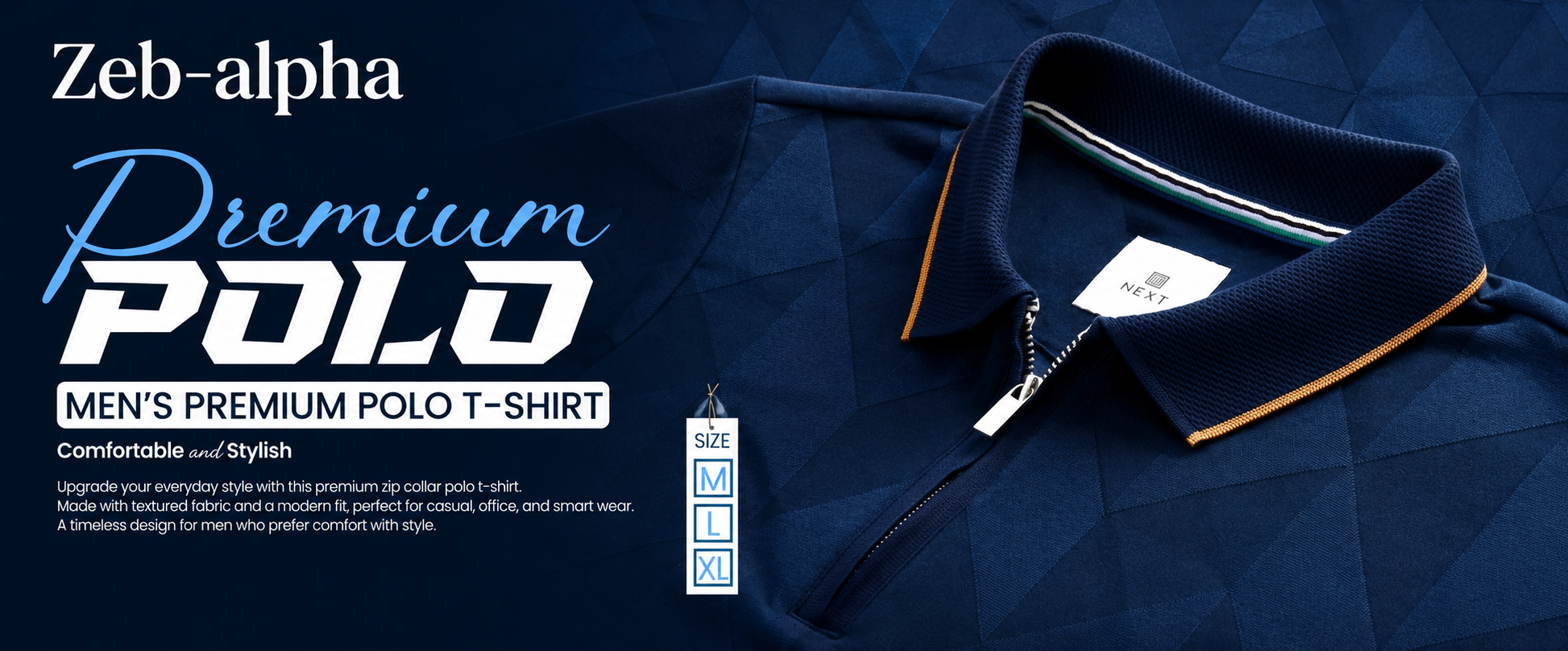
From custom die-cast metallic zip pulls on our zip polos to double-stitched shoulder taping and reinforced collar ribs, every piece in our drop is designed to be lived in, washed, and worn without compromising on elegance.
Writing an article, business case study, or research paper? Cite this guide with the HTML anchor code above to help fellow entrepreneurs discover 0% commission selling.
Written by Industry Specialist
Verified E-E-A-T
Zebalpha Design Studio
Apparel Engineering
Kolkata, India
Dedicated to helping small apparel brands compete with global giants through zero-fee platforms, transparent economics, and cutting-edge streetwear craftsmanship.